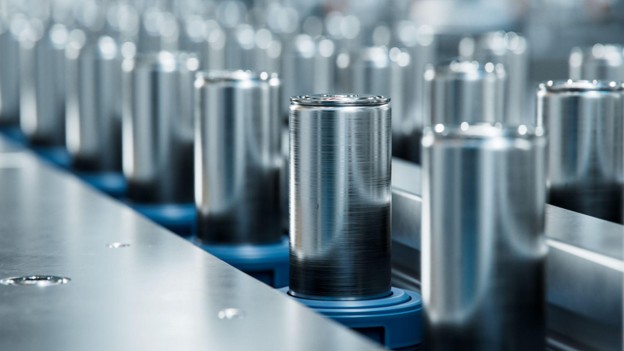
Battery Cell Sub-Systems
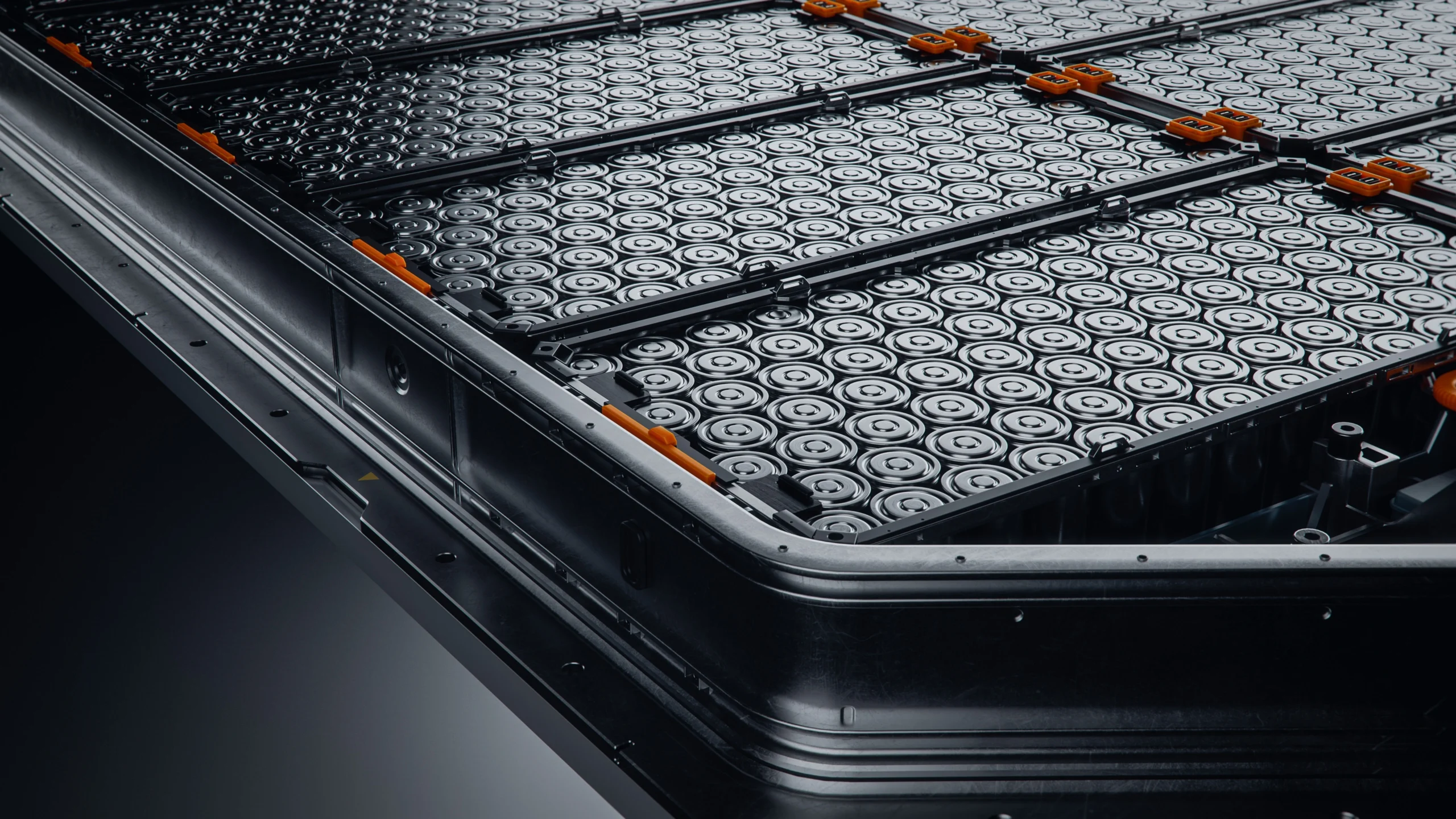
Each battery cell consists of three sub-systems:
- The chemical components such as cathode material and anode material that generate a voltage and a resulting current from electrochemical processes in the electrodes
- The metal components that are used to connect the electrochemical potential of the electrodes with the world outside of the cell, such as current collectors and terminals
- The packaging which protects the chemical components from the environment and the environment from the cell chemistry and potentially also stabilizes the cell interior
Metal Components and Manufacturing Context
In modern cylindrical and prismatic cells, the sub-systems 2 and 3 are metal parts made of Aluminum and Copper. These parts are typically made by metal forming processes used for decades in the automotive or packaging industry. Typically, the manufacturing processes used in the packaging industry are a cost factor of 100+ times faster than those used in the classical automotive industry due to the large volumes needed in consumer packaging. Therefore, it is commonly accepted to copy as many processes for metal forming from the packaging industry as possible to get a cost- and material-effective production of large numbers of cell components, potentially exceeding 100 million parts per year.
Why Cell Packaging Matters
Here, we want to focus on the packaging, which is a sometimes undervalued subject in cell manufacture. The market demand is expected to be between 2 and 3 billion prismatic cans (automotive and storage) and between 5 and 7 billion cylindrical cans (automotive and power tools). Compared to 400 billion beverage cans, this is still a low number; compared to 80 million cars per year, it is a lot. We can see that there is a factor of 5000 between these two old worlds. The new battery industry is just somewhere in between, and this positioning is part of the difficulty in finding the appropriate technologies.
This means that we need to take the best technologies from different worlds to get the answer to the rather new request from the battery industry.
Hard Case Manufacturing Technologies
Prismatic cans, just as an example, had been made via a 10- to 15-stage deep draw process in Asia since the early days of prismatic cells. This was a technology known in Asia, Europe, and the Americas, and that is why it was the technology of choice. Today, the numbers are growing, and therefore the request for faster manufacturing is gaining momentum. Further, material efficiency is getting more importance as the costs are getting more relevant. Consequently, the technology of impact extrusion has been picked up mainly in Europe. Impact extrusion has been used in the aerosol can and tube industry for a hundred years and today is the source for about 7 billion aerosol cans. Mainly in Europe, it is also used for a variety of complex automotive parts, and most of the machines are also from Europe.
Prismatic Cell Design Requirements
The design of a prismatic cell has developed into two main groups:
- Automotive cells, which are not too high to fit in the chassis of a car and are getting a little wider over the last 6 or 7 years. This leads to blanks in deep draw operation far away from a circular optimum, which makes it more and more difficult in operation.
- ESS cells are taller and narrower than automotive cells. This leads to more and more deep draw operations, thus to more complex and more expensive tools and machines.
Manufacturing Precision and Tolerances
The increased speed in manufacturing cells also reflects a very sharp specification of the parts assembled during cell manufacture. Speed minimizes tolerances. In regard to the cell packaging, we can see a well-accepted definition of the press-fit of the lid into the can. The tolerances are not symmetrical, and their definition has a vast impact on the process of laser welding the lid onto the can. Knowledge of the right tolerances is key for minimum spoilage during cell production.
Stacked Cells and Radius Requirements
As we see more and more stacked cells, we can also see a request for sharper bottom and side-wall radii. This is a subtle subject as the metal does not like to be bent so sharply without problems in the classical metal forming processes. There are currently new processes being developed and potentially also additional processes.
Packaging Part Reduction
We have seen in the packaging industry a trend over decades to minimize the number of parts to save cost. Early food cans and early beverage cans had been made of three parts. Today’s beverage cans are made from two parts. They eliminated one of the lids. Today, we can see some solutions using two lids and a rectangular tube as cell packaging. The author of these lines is not sure if this will go a similar way as the beverage cans sooner or later.
Safety Valves and Venting Direction
Further, we can see a trend to safety valves and other features in automotive cells built into the bottom of the cell. In a car, this would lead all gases streaming out of the cell in case of a thermal runaway towards the road and not towards the driver. This is certainly not a bad idea.
This is not easy to do with the established processes and certainly is a driver for innovative processes. This trend opens the door for non-Asian companies to enter the market with new products if cell manufacturers are far-sighted enough to cooperate in the development of such processes.
Cell-to-Pack and Cell-to-Chassis Integration
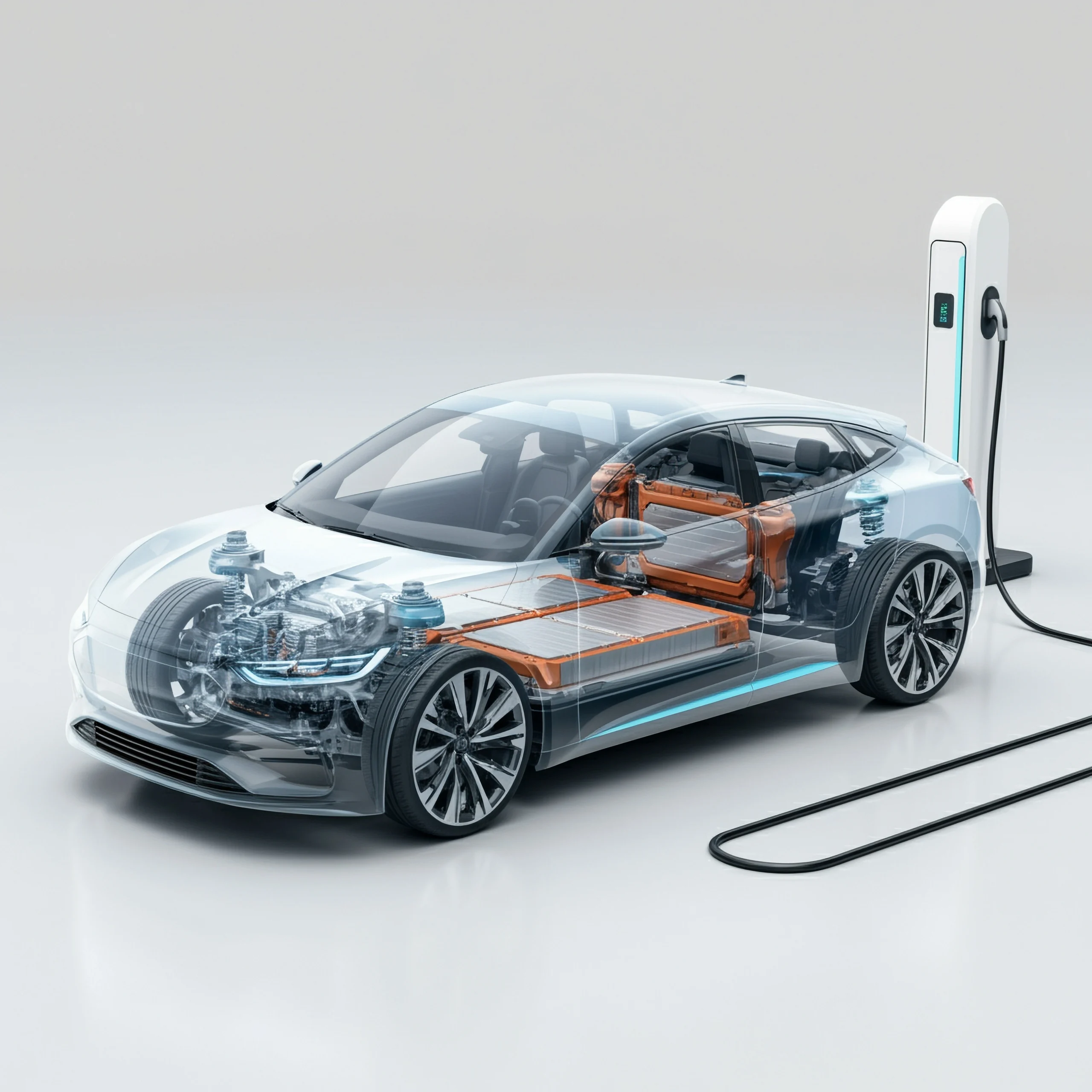
Another example of the need to innovate design and manufacturing processes is the trend to higher integration, such as cell-to-pack and cell-to-chassis. We can see such holistic approaches to make the cell packaging more complex to allow reduction of parts in the pack or even in the car chassis, e.g. by allowing the cell to be a part of the mechanical structure of a car. This may include means for compensating the compressive and tensile stress in sandwich structures.
Aviation and Lightweight Packaging
If we look outside of cars into the growing Aviation industry, we can see a strive to extreme lightweight packaging and also other components. This may involve Aluminum instead of steel cylindrical cans and lids. Aluminum is not only 2x lighter than steel, but it also has a 10x better heat transfer, which makes it easier to control the temperature in a cell.
In this context, we will also need new cooling features fit for purpose for air cooling in planes and drones. Such packaging will be more complex than a simple cylinder and will require a different technology than making a beverage can or today’s 46-cell cases.
All-Solid-State Battery Packaging
Last, but not least, we need to consider all-solid-state (ASS) battery cells coming in the next couple of years in significant numbers. The ASS electrodes unfortunately involve stronger variation in thickness when operated. This “breathing” has to be compensated either by a strong housing of a module or pack, or it can be built into the cell itself. We can see the first patents describing cell internal spring-like features. Whatever the solution will be, the cell packaging will have to take on new roles beyond being “just a dumb box”.
Summary: Development Priorities
In summary, we can say that it may be worthwhile to review where development money is spent. Cell manufacturers typically employ chemists and chemical physicists, which is great for developing new cell chemistry, and that is where the cell manufacturers historically also spend their R&D money.
However, this may leave the two other sub-systems unaddressed, and maybe they miss opportunities to improve the cells because of too tight an internal focus.
We suggest better cooperation between cell manufacturers and third-party metal forming specialists to cover all three sub-systems.
Bernd Ullmann is Avicenne Energy’s Battery Cell Case and Component Expert. He’s experienced in developing, manufacturing, and selling battery components, such as cell cases (cylindrical, prismatic), lids, terminals, bus bars, and other parts with a focus on the battery and e-mobility markets. Bernd has supported clients across the North American battery value chain and is available to support your organization for Q&A’s, on a project basis, or through ongoing support. Click below to schedule a quick discovery call to see how Bernd or our other experts can support your team.