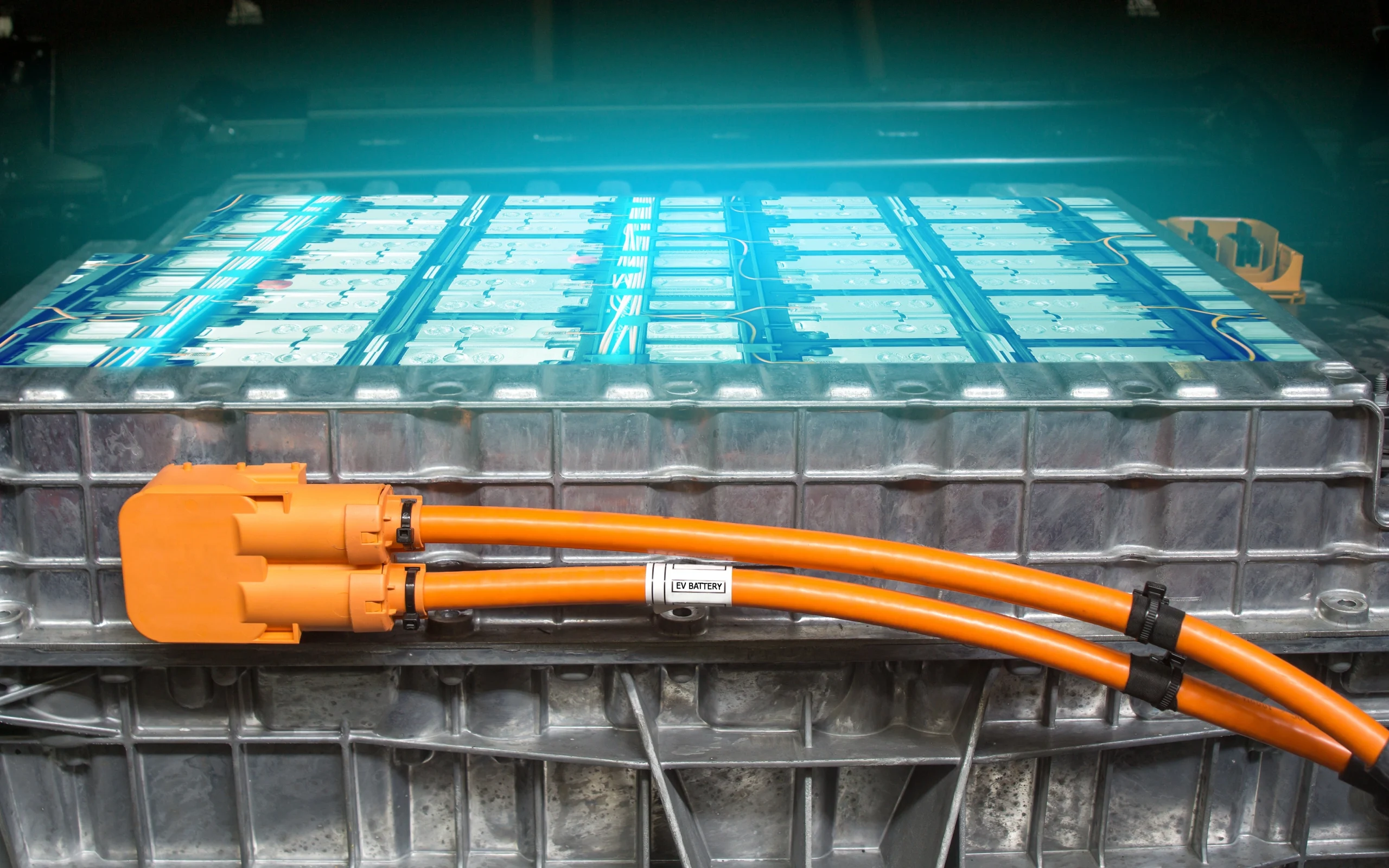
Nickel-Based Li-Ion Captured 33% of 2025 Global Li-Ion Demand
Nickel-Based Li-Ion demand will double by 2030
Forecasting 32% Share of 2030 Global Li-Ion Demand
Lithium-ion nickel manganese cobalt (NMC) chemistry is among the most widely adopted battery chemistries in electric vehicles, largely because it delivers a compelling combination of high energy density, strong power capability, durable cycle life, and operational reliability. This performance profile makes NMC particularly well suited to EV applications that require extended driving range, responsive acceleration, efficient packaging, and consistent long-term performance.
Within an NMC cell, each constituent metal serves a distinct electrochemical and structural function. Nickel is primarily responsible for increasing specific energy, enabling higher energy density and, by extension, greater vehicle range. Manganese contributes to thermal and chemical stability, supporting safety and robustness under demanding operating conditions. Cobalt helps preserve the structural integrity of the cathode material, enhancing durability, performance consistency, and cycle-life retention over time.
Automakers have therefore favored NMC batteries across many passenger EV platforms because they can provide longer range in comparatively compact and lightweight battery packs. Compared with lower-energy chemistries such as lithium iron phosphate (LFP), NMC enables higher energy storage per unit mass and volume, which is strategically important for vehicle segments where range, performance, and packaging efficiency are key differentiators.
These advantages, however, come with important tradeoffs. NMC batteries are generally more expensive and depend on critical minerals, particularly nickel and cobalt. This dependence can increase exposure to raw-material price volatility, supply-chain concentration, geopolitical risk, and sustainability concerns related to extraction and sourcing practices.
As a result, NMC remains especially attractive where high range, fast charging capability, and strong vehicle performance are strategic priorities, but its use must be weighed against cost, resource security, and environmental considerations.
Nickel Cobalt Aluminum (NCA) is a high-performance lithium-ion cathode chemistry distinguished by its ability to deliver among the highest energy densities of current battery technologies. This makes it especially valuable in electric vehicle applications where range, power delivery, and overall system performance are central design priorities.
In an NCA cathode, nickel provides the primary contribution to energy capacity, enabling high specific energy and extended driving range. Cobalt supports structural stability and electrical conductivity, helping preserve performance consistency over repeated charge-discharge cycles. Aluminum enhances thermal stability and improves cycle life, strengthening the cathode’s resilience under demanding operating conditions.
This combination of materials positions NCA as a compelling chemistry for long-range electric vehicles, particularly where maximum performance and efficient battery-pack utilization are paramount. Its high energy density allows automakers to achieve substantial range without proportionally increasing pack size or weight, a critical advantage for premium EV platforms.
These benefits, however, involve notable tradeoffs. NCA’s elevated nickel and cobalt content can increase material costs and expose manufacturers to raw-material price volatility and sourcing constraints. The chemistry also requires more rigorous thermal management, as high-nickel cathodes demand careful control to maintain safety, durability, and performance over time.
Historically, NCA has been concentrated at the premium end of the electric vehicle market, where its superior energy density and performance characteristics can justify the added cost and engineering complexity. Ongoing development efforts are focused on reducing cobalt dependence while further improving safety, durability, and longevity, helping ensure that NCA remains competitive as next-generation battery technologies continue to advance.
Nickel-based lithium-ion chemistries, particularly nickel manganese cobalt (NMC) and nickel cobalt aluminum (NCA), are deployed where energy density, power capability, compact packaging, and weight efficiency are central performance requirements. Their value proposition is strongest in applications where higher cost, more sophisticated thermal management, and greater engineering complexity can be justified by superior range, runtime, discharge performance, or system-level efficiency.
Nickel-based lithium-ion batteries are widely used in electric vehicle platforms designed around extended range, premium performance, and optimized pack weight. Because NMC and NCA chemistries can store more energy per unit of mass and volume than lower-energy alternatives such as lithium iron phosphate (LFP), they enable automakers to deliver longer driving range without requiring disproportionately large or heavy battery packs.
This makes them especially relevant for premium, long-range, and performance-oriented EVs, where customers expect rapid acceleration, high power output, sustained driving capability, and efficient vehicle packaging. Although these chemistries typically involve higher material costs and require more rigorous thermal and safety management, they remain strategically important where energy density and performance justify the added system complexity.
Plug-in hybrid electric vehicles can also benefit from nickel-based lithium-ion batteries, as PHEV architectures require compact battery packs with high energy and power characteristics. Since available battery space is often constrained by the need to accommodate both an electric drivetrain and an internal combustion system, higher energy density allows manufacturers to maximize electric-only driving range without consuming excessive vehicle volume.
In this context, nickel-based chemistries offer a practical balance between compactness, usable range, and power delivery, helping PHEVs provide meaningful electric driving capability within tight packaging limits.
Nickel-based lithium-ion batteries can support data center, in-rack, and uninterruptible power supply applications where compact footprint, high power delivery, and dependable backup performance are essential. Compared with legacy lead-acid systems, lithium-ion solutions can reduce maintenance requirements, improve space utilization, and provide more responsive power availability during grid interruptions or transient events.
For mission-critical environments, the appeal lies in the ability to deliver high power in a relatively compact format. However, these applications also require careful system design, monitoring, and safety oversight to ensure reliability under demanding operating conditions.
Aerospace, defense, drone, and advanced mobility platforms place a premium on weight reduction, volumetric efficiency, and mission endurance. Nickel-based lithium-ion chemistries are attractive in these sectors because their high specific energy can extend operating range, reduce system weight, and improve overall mission performance.
These advantages are particularly important in platforms where every kilogram and cubic centimeter affects payload, endurance, maneuverability, or operational flexibility. At the same time, aerospace and defense applications often impose stringent qualification, testing, safety, and reliability standards, making engineering validation and risk management central to deployment.
Emerging electric aviation, unmanned aerial systems, and electric vertical takeoff and landing platforms require battery systems that combine high specific energy, compact pack architecture, and strong discharge performance. Nickel-based lithium-ion chemistries are relevant in these markets because they help reduce battery mass while supporting the power demands associated with takeoff, climb, maneuvering, and sustained flight.
In aviation and unmanned systems, weight is not merely a design variable; it is a fundamental determinant of range, payload capacity, and commercial viability. For this reason, higher-energy nickel-based chemistries may be favored over lower-energy alternatives, despite their greater cost, safety requirements, and thermal management complexity.
Nickel-based lithium-ion batteries can be used in specialty vehicles, off-road equipment, marine systems, robotics, and other industrial platforms that require compact energy storage with high power output. These applications often operate in environments where space is limited, runtime is valuable, and performance demands are substantial.
For equipment that must deliver meaningful work cycles without excessive battery size or weight, NMC and NCA chemistries can provide a strong fit. Their energy and power characteristics support demanding duty cycles, though successful deployment typically requires careful integration, robust battery management, and application-specific safety engineering.
Nickel-based lithium-ion batteries are commonly used in power tools, professional equipment, robotics, medical devices, and other portable systems where users need lightweight, rechargeable power with high energy content. In these applications, compactness and runtime are often more important than achieving the lowest possible cell cost.
The ability to deliver substantial power from a small, lightweight pack makes nickel-based chemistries especially useful for professional-grade tools and portable systems that must combine mobility, durability, and sustained performance. Their higher energy density can improve user productivity by extending operating time while reducing the burden of carrying heavier battery packs.
Although LFP has become the dominant chemistry in many stationary energy storage applications, nickel-based lithium-ion batteries can remain relevant where space, weight, or installation footprint is highly constrained. Examples include dense urban installations, indoor or building-integrated systems, marine and offshore facilities, and other settings where energy density remains a meaningful differentiator.
In these use cases, the value of a smaller, lighter system may offset the higher cost and more intensive safety requirements associated with nickel-based chemistries. Their role is therefore more selective in stationary storage, but still strategically important where physical constraints limit the practicality of larger battery systems.
Nickel-based lithium-ion chemistries are well suited to portable and mobile systems that require reliable, compact, mission-critical power. Military field equipment, communications systems, medical devices, and other high-reliability applications often depend on batteries that can deliver long runtime while minimizing weight and volume.
In these settings, energy density directly affects operational endurance, mobility, and system effectiveness. While cost, certification, thermal behavior, and safety oversight remain important considerations, nickel-based lithium-ion batteries continue to offer significant advantages where compact, high-performance power is essential.
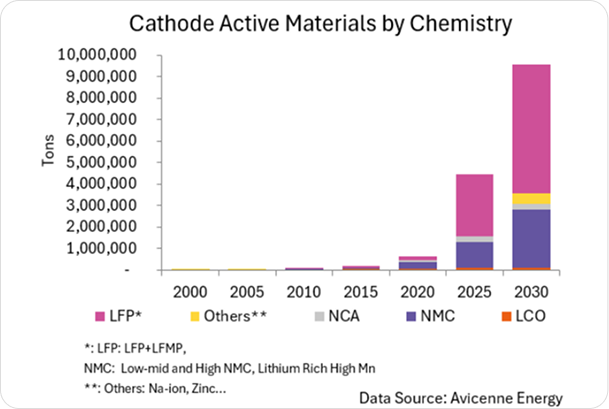
Nickel-based lithium-ion batteries accounted for 33% of global lithium-ion battery demand in 2025, reflecting their continued importance in applications where high energy density, reduced weight, and compact pack architecture remain critical performance requirements. Their value proposition is strongest in systems where battery mass and volume directly influence range, payload capacity, runtime, or mission endurance.
Although lithium iron phosphate (LFP) has gained substantial market share in cost-sensitive electric vehicle and stationary energy storage segments, nickel-based chemistries such as nickel manganese cobalt (NMC) and nickel cobalt aluminum (NCA) remain highly relevant in applications with more demanding performance criteria.
These include long-range electric vehicles, premium vehicle platforms, high-performance EVs, plug-in hybrids, aerospace and defense systems, and other space-constrained use cases where superior energy density can justify higher system complexity.
Their ability to deliver more energy from a smaller and lighter battery pack makes nickel-based chemistries difficult to displace in performance-driven markets. At the same time, their 2025 market position reflects a more selective role than in prior periods. Higher material costs, more stringent safety and thermal-management requirements, and supply-chain considerations related to nickel and cobalt have accelerated the shift toward LFP in many high-volume, cost-sensitive applications.
As a result, nickel-based lithium-ion batteries remain strategically important, but increasingly concentrated in use cases where performance, range, and packaging efficiency outweigh the imperative for lowest upfront cost.
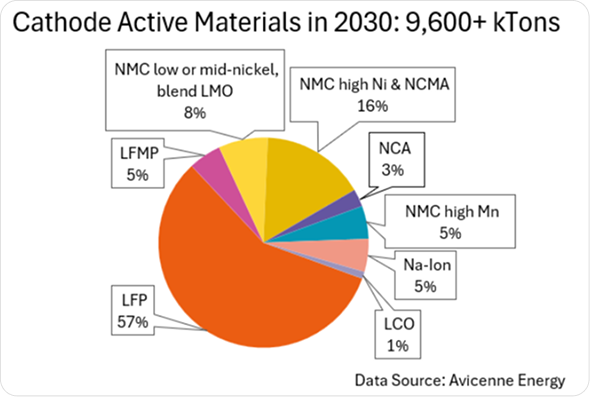
Nickel-based lithium-ion batteries are expected to retain a 32% share of global lithium-ion battery demand in 2030, underscoring their continued relevance in applications where high energy density, reduced weight, and compact pack architecture remain critical design imperatives. In these use cases, lithium iron phosphate (LFP) cannot fully replicate the performance advantages of nickel-based chemistries, particularly where battery mass and volume directly affect system capabilities.
Even as LFP continues to expand across cost-sensitive electric-vehicle and stationary-energy-storage markets, nickel-based chemistries such as nickel manganese cobalt (NMC) and nickel cobalt aluminum (NCA) are expected to remain essential in long-range electric vehicles, premium vehicle platforms, plug-in hybrids, aerospace, defense, and other performance-driven applications. Their ability to deliver more energy in a smaller, lighter battery pack makes them strategically important in applications where range, payload capacity, runtime, and operational endurance are central requirements.
The modest decline in market share from 2025 to 2030 reflects a more mature and application-specific segmentation of the battery market rather than a wholesale substitution of one chemistry for another. Nickel-based lithium-ion batteries are likely to cede some volume in lower-cost, high-throughput segments, but their role should remain durable in markets where superior packaging efficiency, extended range, and high performance justify higher material costs and more complex thermal management requirements.
Even as LFP continues to expand across cost-sensitive electric-vehicle and stationary-energy-storage markets, nickel-based chemistries such as nickel manganese cobalt (NMC) and nickel cobalt aluminum (NCA) are expected to remain essential in long-range electric vehicles, premium vehicle platforms, plug-in hybrids, aerospace, defense, and other performance-driven applications. Their ability to deliver more energy in a smaller, lighter battery pack makes them strategically important in applications where range, payload capacity, runtime, and operational endurance are central requirements.
With more than 30 years of battery market intelligence and a track record supporting hundreds of clients across the North American battery supply chain, Avicenne Energy brings a distinctive combination of technical depth, commercial insight, and strategic perspective to the evolving role of nickel-based lithium-ion batteries.
Our expertise spans electric vehicles, stationary energy storage, aerospace and defense, industrial systems, and other high-performance applications where chemistry selection has direct implications for cost, safety, range, runtime, manufacturability, and long-term competitiveness.